How the Moon Phase Can Make or Break Your Bioluminescence Tour
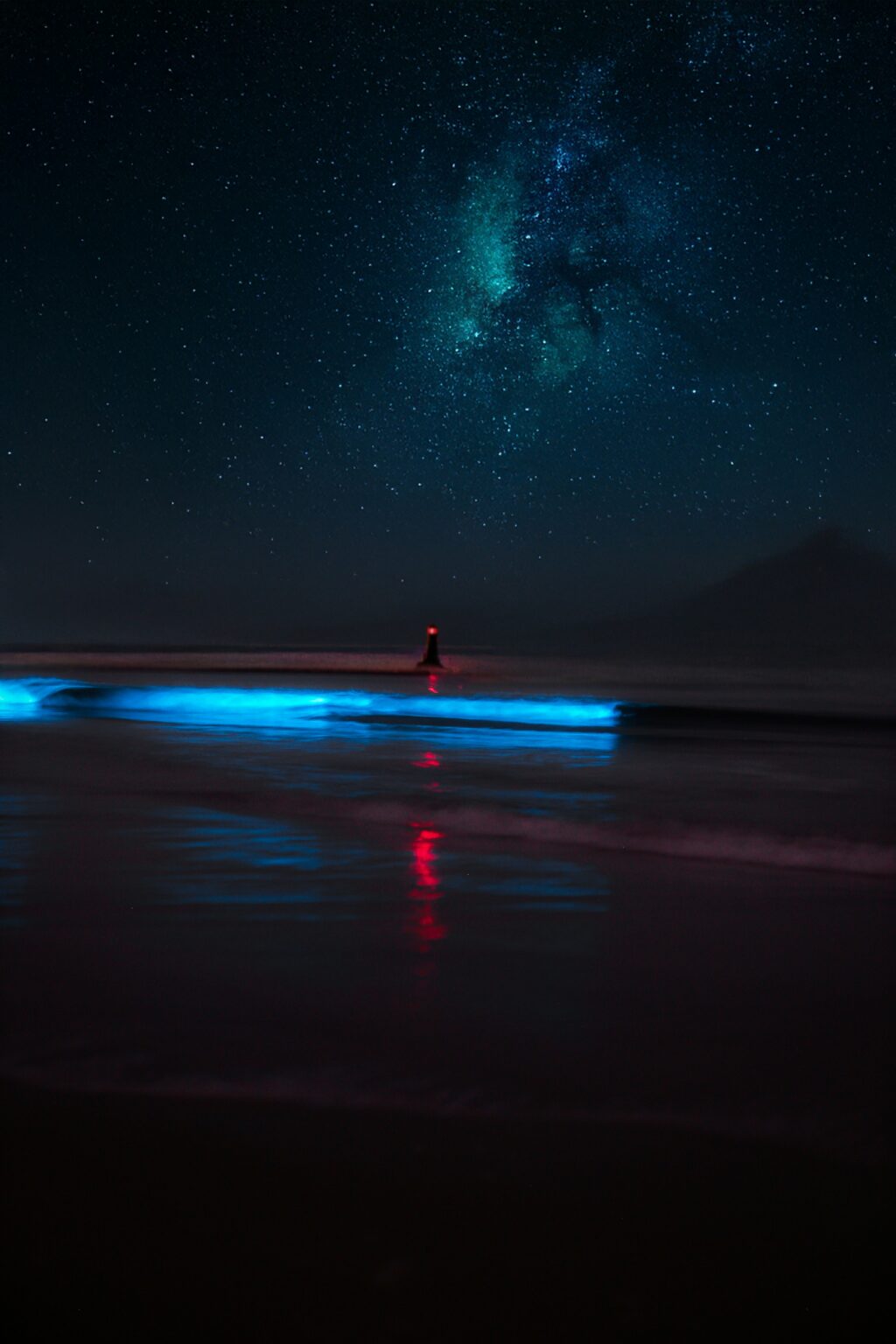
Imagine paddling through a corridor of mangroves, the air thick with the scent of salt and the sound of distant crickets. With every stroke of your oar, the water beneath you erupts into an otherworldly neon blue. It feels like you’ve accidentally steered your kayak into a scene from a sci-fi epic. This is the magic of bioluminescence in Florida, a natural phenomenon that draws thousands of adventurers to the Space Coast every year.
However, there is a silent player in the sky that dictates exactly how much “magic” you actually see: the moon. While the tiny dinoflagellates and comb jellies are always there, their ability to wow you depends almost entirely on the lunar cycle. If you book your tour during a full moon, you might find yourself staring at beautiful scenery but missing the spectacular light show hidden just beneath the surface.
The Battle Between Moonlight and Microbes
Bioluminescence is a chemical reaction—specifically, the oxidation of a molecule called luciferin—that produces light without heat. In Florida’s lagoons, this light is a delicate, ethereal blue. To see it at its most vibrant, you need high contrast. In the same way that you can’t see the stars in the middle of a brightly lit city, you can’t fully appreciate the glow of the water if the sky is flooded with light.
A full moon acts like a giant celestial spotlight. It illuminates the surface of the water, washing out the subtle flashes of the organisms. According to the National Ocean Service, bioluminescence is used by marine life for everything from attracting mates to scaring off predators, but for human observers, it requires a dark “canvas” to be visible. When the moon is at its brightest, the “glow” might look like faint, milky streaks rather than the explosive, neon sparks you see in photographs.
Why the New Moon is the “Gold Standard”
For the most immersive experience, you want to aim for the “New Moon” phase or the “Dark Skies” weeks. This is the period when the moon is either not visible at all or rises so late in the night that it doesn’t interfere with evening tours.
During a New Moon, the lagoon becomes a pitch-black mirror. Without any overhead competition, the bioluminescence takes center stage. Every movement—a fish darting under your boat, a manatee surfacing nearby, or even the splash from your paddle—triggers a brilliant display. On these nights, the water doesn’t just glow; it vibrates with light. It’s during these dark windows that you’re most likely to see the “glow-in-the-dark” dolphins or the shimmering trails of mullet jumping through the air.
Navigating the “In-Between” Phases
If you can’t make it out during a New Moon, don’t panic. The “Quarter Moon” phases offer a unique middle ground. During these times, the moon might be visible, but it often sets early or rises late. Many professional tour guides track these specific “moonset” times to schedule departures that coincide with the darkest possible hour.
Furthermore, cloud cover can occasionally act in your favor. A thick layer of clouds can act as a natural filter, blocking out a bright moon and creating “artificial” dark-sky conditions. However, relying on the weather is always a gamble. For those traveling from out of town, consulting a Lunar Calendar before booking is the smartest way to ensure you aren’t disappointed.
Seasonality vs. Luminosity
While the moon phase controls the visibility, the season controls the “cast” of your show. In Florida, the summer months (June through September) are the peak for dinoflagellates—the tiny plankton that produce those sharp, electric blue flashes. As the water cools down in the winter, the dinoflagellates fade, and the “Comb Jellies” take over.
Comb jellies are gelatinous, prehistoric-looking creatures that don’t sting. Instead of flashing when the water moves, they glow with a steady, rainbow-like shimmer when they are touched or bumped. While the experience is different, the rule of the moon still applies: the darker the night, the more you’ll see the internal “light show” of these fascinating jellies.
Setting Your Expectations
It’s important to remember that bioluminescence is a living, breathing part of the ecosystem. It’s not a light bulb you can flick on and off. Beyond the moon, factors like water temperature, recent rainfall, and even the tide can influence how active the organisms are on any given night.
A reputable tour company won’t just put you in a boat and send you out; they will help you understand the conditions of the night. Even on a night with some moonlight, an experienced guide knows the “shadowed” corners of the lagoon—areas tucked behind tall mangroves or tucked into narrow channels—where the light pollution is minimized, and the glow is preserved.
By doing a little bit of homework and aligning your trip with the lunar cycle, you move from being a casual observer to witnessing one of nature’s most exclusive performances. It is one of the few times in life where being “left in the dark” is exactly what you want.