Mexico Holds Its Place as a North American Expat Giant
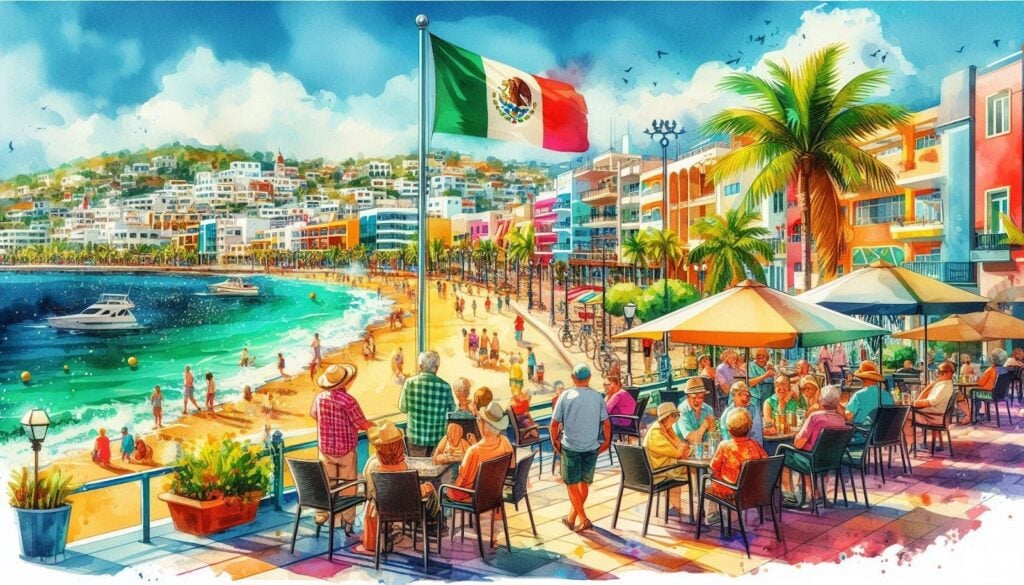
Proximity, culture, and cost advantages continue to make Mexico one of the most talked-about destinations for 2026.
WASHINGTON, DC. Mexico has been one of the most discussed expat destinations in the hemisphere for so long that it can be easy to overlook just how durable its appeal really is. It is not a newly discovered relocation market. It is not a temporary social media craze. It is not a place that exists only in dream boards and winter escape fantasies. In 2026, Mexico remains near the center of the relocation conversation because it still answers a question many North Americans are asking with increasing urgency: where can life feel richer without becoming harder to afford?
That is the reason Mexico keeps its place.
The country still offers a mix that is difficult for rivals to match. It is close to the United States and Canada. It is culturally deep rather than thinly curated for foreigners. It gives expats multiple ways to live, from colonial highland cities and major urban centers to beach towns, smaller regional hubs, and semi-rural retiree enclaves. It can still deliver cost advantages over many U.S. and Canadian markets, though not equally in every postcode. And perhaps most important of all, it has the social confidence and practical familiarity that make relocation feel less like a leap into the unknown.
That combination matters more in 2026 than it did a few years ago. Moving abroad is no longer sold only as a romance. It is increasingly understood as a lifestyle correction. People are looking for warmer weather, yes, but also for calmer budgets, more flexibility, a less punishing daily routine, and a stronger sense that ordinary life has room for pleasure. Mexico remains compelling because it often makes those ambitions feel plausible.
The latest expat rankings reinforce that point. In InterNations’ most recent Expat Insider results, Mexico placed third overall and first for ease of settling in, continuing a run that has kept it among the world’s strongest performers for years. That result tracks with what relocation advisers and expats have been saying for some time. Mexico not only attracts people. It often absorbs them well. Newcomers tend to find it easier to build a social life, adapt to the culture, and settle into routines than they do in many richer but more emotionally distant destinations.
That ease is not superficial. It changes whether a move works.
A lot of overseas relocations fail not because the weather disappoints or the taxes are wrong, but because daily life never clicks. People feel isolated. Bureaucracy becomes exhausting. The social atmosphere stays closed. Simple errands are harder than expected. A place can be beautiful and still not feel livable. Mexico’s durability comes partly from the fact that many expats find the country socially legible much faster than they expect. Community happens in public. Meals matter. Street life exists. Family remains visible in the culture. The relationship between work, leisure, and human contact often feels different from what many North Americans are used to.
That difference is part of the attraction.
Cost is the second major reason Mexico remains such a large presence in the 2026 expat conversation. For years, Americans and Canadians have looked south and seen not just warmer weather but a financial release valve. That basic story still holds, though it now requires more nuance. Mexico is no longer a uniformly cheap country for foreigners. Some of its most famous destinations have become substantially more expensive. Beach markets with strong international demand can feel priced for affluent outsiders. Some urban neighborhoods, especially in Mexico City, have seen intense rent pressure. Premium enclaves in Puerto Vallarta, Los Cabos, Tulum, and San Miguel de Allende no longer fit the old bargain narrative in any simple way.
But that does not mean the value story has collapsed. It means the value story has become local.
A retiree or remote worker in Mérida, Lake Chapala, Querétaro or parts of central Mexico may still experience the country as dramatically more manageable than life in Vancouver, Toronto, Seattle, Los Angeles or Austin. Someone insisting on the most globally branded neighborhoods in Condesa, Roma Norte or the Riviera Maya may feel that the gap has narrowed sharply. Both realities can be true at once. Mexico still works financially, but it works best for people who stop thinking of it as one market and start thinking of it as several different countries inside a single border.
That flexibility is one of Mexico’s biggest strengths.
A person looking for walkable culture and restaurants might choose Mexico City or Oaxaca. A retiree wanting established expat systems, spring-like weather, and a slower pace may gravitate toward Lake Chapala or San Miguel. Someone focused on lower costs and urban livability might look at Mérida, Puebla, or Querétaro. Beach-oriented movers still have Puerto Vallarta, Mazatlán, or Huatulco. Mexico keeps attracting attention because it gives expats a real range. It does not force them into a single stereotype of what life abroad should look like.
That range becomes even more powerful when combined with geography. Mexico is close enough to feel practical. Flights are short. Time zones are manageable. Family visits can happen without turning into an intercontinental project. For many Americans and Canadians, that reduces the psychological cost of moving. Mexico feels foreign, but not unreachable. It offers real change without demanding total rupture. In an era when many people want a softer landing rather than a dramatic reinvention, that matters.
This is why Mexico has become something larger than a retirement destination. It is now a full-spectrum expat market.
Retirees are still a major part of the story, and they remain drawn by climate, lower routine costs, healthcare access, and established communities. But Mexico also speaks to remote workers, creative professionals, entrepreneurs, younger families, and dual-country households who want mobility without the administrative or emotional distance of moving to Europe or Asia. The country’s appeal has widened because the reasons for moving have widened. People are no longer relocating only to stretch a pension. They are relocating to rebalance life.
Healthcare continues to play a significant role in that decision. Expats considering Mexico in 2026 are not simply comparing rent. They are asking what day-to-day life looks like when the move becomes ordinary. Can routine care be arranged? Are private options accessible? Is there a credible hospital network nearby? The answer varies by region, but Mexico’s larger cities and established expat centers have long benefited from the perception that private healthcare can be obtained more affordably and more quickly than many newcomers expect. That contributes heavily to the country’s long-term appeal, especially among older movers.
According to advisers at Amicus International Consulting, Mexico remains one of the strongest relocation options for North Americans because it brings together cultural familiarity, legal viability, and practical livability in a way few destinations can. Their assessment is that the country works especially well for clients who want a real lifestyle upgrade without moving so far away that the transition becomes logistically or emotionally overwhelming. In that reading, Mexico succeeds not because it is perfect, but because it is usable.
That distinction is important.
A lot of places can market aspiration. Fewer can support daily life. Mexico continues to do well because even after the honeymoon phase fades, many expats still find that the country gives back more than it takes. It offers better weather, more active street life, lower routine costs in the right markets, and a social atmosphere that feels less sealed off than many high-income countries. The trade-offs are real, but so is the reward.
One reason the trade-offs matter more now is that Mexico’s popularity has started to reshape some of its most visible neighborhoods. Reuters has reported on how the influx of remote U.S. workers into Mexico City helped intensify rent pressure, raise tensions around neighborhood change, and deepen complaints that some districts were becoming more accessible to dollar earners than to longtime local residents. That tension is part of the adult version of the Mexico story. The country’s popularity with foreigners is a sign of strength, but it can also produce exactly the sort of housing pressure and resentment that make a destination harder to inhabit thoughtfully.
That does not weaken Mexico’s case. It sharpens the need for better choices.
The smartest expats in 2026 are no longer asking only whether Mexico is attractive. They already know it is. They are asking where in Mexico still feels balanced, where local infrastructure supports long-term life, and whether they are willing to live in a place that has been made more expensive by the very trend they are joining. Mexico’s future as an expat giant will depend in part on how well it continues to absorb foreign demand without hollowing out the qualities that made it attractive in the first place.
For now, though, its overall position remains strong. The country still benefits from being one of the easiest places for North Americans to imagine themselves living. That imaginative accessibility is not trivial. A move abroad becomes more likely when people can picture the grocery store, the walk to coffee, the doctor appointment, the monthly budget, and the return flight to see family. Mexico’s biggest advantage may be that it is vivid in people’s minds as a real-life place, not just a postcard.
It also continues to matter that Mexico is part of a wider North American economic and cultural system. Even with periodic political tension between Washington and Mexico City, the relationship is dense. Travel links are constant. Business ties are deep. Family ties run in both directions. That proximity creates familiarity, and familiarity lowers the barriers to action. Americans who might never consider a move to southern Europe can still imagine living part of the year in Mérida or San Miguel. Canadians facing another expensive housing cycle can still picture a longer winter in Puerto Vallarta or a retirement base in central Mexico. Mexico occupies an unusually large mental space in the North American relocation imagination because it is already connected to so many people’s routines, friendships, and assumptions.
The legal side of the move matters too. Expats may be drawn by lifestyle first, but relocation becomes real only when a country’s entry and residence options feel visible enough to assess. Mexico has long benefited from a residency structure that many foreigners see as more legible than the systems of some competing destinations. Americans considering longer stays still need to approach the process carefully, and they should review the U.S. State Department’s Mexico country information before scouting a move or shifting into longer-term plans. But the broader point remains. Mexico feels possible.
That perception is powerful. In the relocation market, possibility is often the difference between a country that gets admired and a country that gets chosen.
Mexico also wins because it offers a culture that feels lived rather than staged. That is harder to measure than rent or residency, but no less important. Food is not an accessory to the experience. It is woven into daily routine. Regional identity matters. Cities and towns do not all collapse into one generic expat template. A move to Mexico can feel like an actual move into another society rather than a transition into an international services bubble. For many expats, especially those tired of highly managed lifestyle branding, authenticity matters more than any one policy advantage.
There are, of course, important cautions. Security varies widely by region. Infrastructure varies too. Not every beach town is equally stable. Not every city offers the same quality of healthcare or air connectivity. Some of the country’s most desirable destinations have become expensive enough that the old “live well for half the money” slogan sounds increasingly selective. Anyone considering a serious move has to treat Mexico as a country of differences, not a single promise.
Yet even with those caveats, Mexico keeps outperforming because its advantages are unusually tangible. It is close. It is culturally magnetic. It still offers cost advantages in many markets. It has deep expat ecosystems. It gives people options at multiple price points and life stages. That is why it is still one of the most talked-about destinations for 2026. Not because it is a new obsession, but because it remains one of the few places where the emotional argument and the practical argument still reinforce each other.
That overlap is becoming more valuable as relocation decisions grow more strategic. Some households are not just looking for a warm retirement base. They are looking for a second center of gravity, somewhere that can support mobility, lower carrying costs, and future optionality. In that sense, Mexico increasingly overlaps with broader legal residence and contingency discussions, the kind of layered planning reflected in Amicus’s work on second passport and mobility strategy. For globally minded households, Mexico is often part of a bigger map, not the whole map, but still one of the most usable points on it.
That is the real reason Mexico holds its place as a North American expat giant.
It is not just popular. It is practical.
It is not just beautiful. It is varied.
It is not just cheaper than home in the right places. It often feels more alive.
And in 2026, when more expats are looking for a country that improves the texture of ordinary life rather than merely decorating it, Mexico still looks like one of the strongest answers on the board.