Is Ketamine Covered by Insurance? Understanding TMS Therapy in NYC

Insurance coverage is one of the first practical questions patients ask when they start researching ketamine and TMS therapy. It is also one of the most confusing, because the answers vary significantly between treatment types, between insurance plans, and between providers. Getting clear information upfront can save considerable time, money, and frustration.
This article addresses insurance coverage for both ketamine treatment and TMS therapy in New York City, including what is and is not typically covered, what the prior authorisation process involves, and what patients can do when coverage is initially denied. It also explains the specific dynamics of accessing these treatments in the New York market, where the density of providers creates both more options and more variation in quality.
TMS Therapy and Insurance Coverage
TMS therapy for major depressive disorder is now covered by most major commercial insurance plans, Medicare, and a growing number of Medicaid programmes. Coverage is typically subject to clinical criteria that reflect the treatment’s evidence base and FDA clearance: patients generally need to have tried and not responded to at least two antidepressant medications of adequate dose and duration before TMS will be approved.
The prior authorisation process varies by insurer but typically requires a letter of medical necessity from the treating psychiatrist, documentation of prior antidepressant trials, and standardised depression rating scale scores demonstrating current symptom severity. Most insurers review these submissions within a few weeks. Denials, where they occur, are often successfully appealed with additional clinical documentation.
The Centers for Medicare and Medicaid Services requires under the Mental Health Parity and Addiction Equity Act that insurers offering mental health benefits cannot impose restrictions on those benefits that are more restrictive than those applied to comparable medical and surgical benefits. This has been an important lever in securing TMS coverage for patients whose initial claims were denied on grounds that did not apply to equivalent medical procedures.
For TMS therapy NYC specifically, the New York market has a significant number of REMS-certified and insurance-contracted TMS providers. Choosing a clinic with established relationships with New York’s major commercial insurers, including Aetna, Cigna, UnitedHealthcare, Empire BlueCross, and others, will significantly streamline the prior authorisation process.
Is Ketamine Covered by Insurance?
The insurance picture for ketamine is more complex and depends heavily on which form of ketamine treatment is being considered.
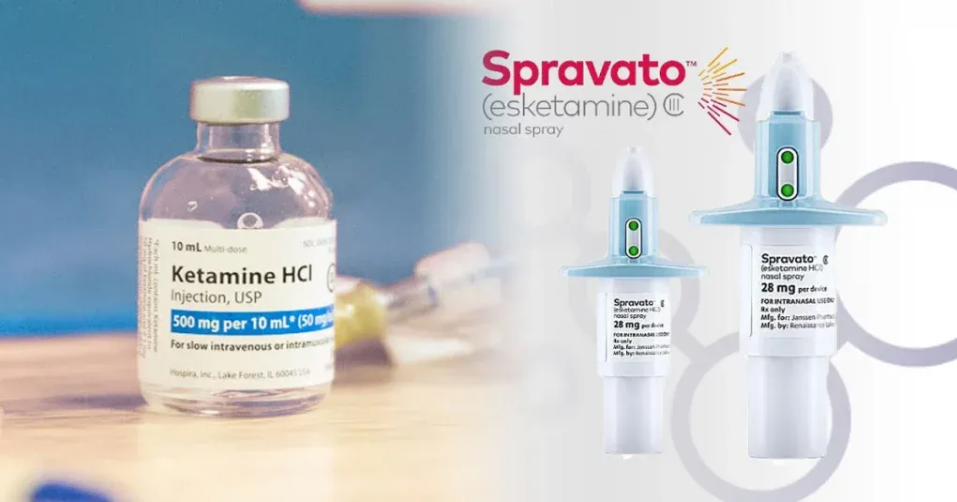
Spravato, the FDA-approved intranasal esketamine, is covered by most major commercial insurance plans and Medicare Part B for qualifying patients. Coverage criteria are similar to those for TMS: a diagnosis of treatment-resistant depression, defined as inadequate response to at least two antidepressants, and medical necessity documentation. Because Spravato has FDA approval for a specific psychiatric indication and is dispensed through a certified REMS programme, insurers treat it as a conventional prescription benefit with established coverage pathways.
Intravenous ketamine infusions are a different matter. Ketamine infusions are administered using an off-label formulation, meaning the drug is used for a psychiatric purpose beyond its original FDA approval for anaesthesia. Most commercial insurers do not cover off-label ketamine infusions, and Medicare does not currently cover them either. The majority of patients who receive ketamine infusions pay out of pocket, with costs typically ranging from 400 to 800 dollars per infusion and a standard course involving six infusions.
There are exceptions. Some insurance plans cover ketamine infusions as part of a broader mental health benefit, particularly for treatment-resistant depression or suicidal ideation. Some practices have developed relationships with specific insurers that allow for case-by-case reimbursement. And some patients are able to obtain partial reimbursement through out-of-network benefits if their plan includes them.
What to Do If Coverage Is Denied
Insurance denials for TMS or Spravato are not the end of the process. A significant proportion of initial denials are overturned on appeal, particularly when additional clinical documentation is provided and the medical necessity argument is well constructed.
- Request a peer-to-peer review: ask your insurer to arrange a review where your treating psychiatrist speaks directly with the insurer’s medical reviewer. This process frequently results in overturned denials
- Document the clinical history thoroughly: the more detailed and specific the documentation of prior treatment failures, the stronger the medical necessity case
- Cite the Mental Health Parity Act: if your insurer is applying criteria to TMS or Spravato that it would not apply to a comparable medical treatment, this may constitute a parity violation that can be raised in the appeals process
- Work with your provider’s billing team: clinics experienced with insurance denials will have specific knowledge of what additional documentation has successfully overturned denials with your insurer
- Contact your state insurance commissioner: if you believe a denial is unlawful, your state’s insurance regulator can investigate parity violations

The NYC TMS and Ketamine Market
New York City has one of the highest concentrations of TMS and ketamine providers in the country. This means more options for patients but also more variation in quality, pricing, and insurance contracting. When evaluating providers in New York, the same criteria apply as elsewhere, but patients have the advantage of being able to compare multiple qualified practices before committing.
The best practices in New York combine psychiatric supervision, experience with insurance authorisation across the major New York commercial payers, established protocols for both TMS and ketamine, and the capacity to offer both treatments within the same practice for patients who may benefit from a combined approach.
Final Thoughts
Insurance coverage for these treatments is more accessible than many patients assume, particularly for TMS and Spravato. The prior authorisation process requires preparation, but a clinic with experienced billing staff will manage most of it on your behalf. For ketamine infusions, the out-of-pocket reality requires honest financial planning, but the cost of a treatment course, weighed against the ongoing cost of untreated or inadequately treated depression, deserves to be considered in full context.
The most important first step is having a conversation with a qualified provider who can give you an accurate picture of your specific insurance situation and the realistic costs of treatment in your particular circumstances.