The Comfort Factor of Searching for Authenticity in a Fast Food World
There is a quiet weariness that settles in after a steady diet of convenience. We live in a world designed for speed, where every transaction is instantaneous, and every craving can be met with the push of an app button. But if fast food is efficiency perfected, why do we so often leave the drive-thru window feeling profoundly unsatisfied? The answer, many of us are realizing, is that our brains and bodies are wired to seek more than just calories; we are searching for authenticity—a quality that the fast food machine is specifically designed to minimize.
In this landscape of optimization and engineered flavor, true comfort is found not in speed, but in heritage and care. It’s found in places that honor a recipe, not a process. When you seek out quality, you are seeking the difference between a mass-produced product and something crafted, like the house-made deli classics and freshly baked pastries you find at Henri’s Bakery & Deli. This longing for the real thing is more than just nostalgia; it’s a deep psychological need that transcends mere hunger.
The Hollow Promise of Hyper-Convenience
The modern, ultra-processed food system is built on consistency. Every burger, every soda, every fry tastes exactly the same, whether you buy it in California or Connecticut. While this predictability is marketed as a virtue, it strips the experience of the unique human element that makes food comforting. Eating becomes a transaction, not an experience. It serves the immediate need but fails the long-term desire for connection.
We often turn to comfort foods when we’re feeling stressed, bored, or lonely, but research suggests the underlying psychology is more complex than simple pleasure. A study published in the journal Nutrients highlighted that people frequently turn to comfort foods to manage negative affect, alleviate boredom, or even to give themselves a cognitive boost, rather than just seeking a hedonic reward alone. This suggests that when we eat, we are trying to regulate our internal emotional state. If the food itself feels disconnected, automated, and soulless, it fails in its primary mission to soothe us.
Nostalgia is the Best Ingredient
Authentic food operates on a dual level: it nourishes the body and anchors the mind. The most comforting dishes are usually tied to memories, culture, and social routines. They taste like childhood, like tradition, like home. This powerful link between memory and flavor is why we instinctively trust the places that have been doing things the same way for decades.
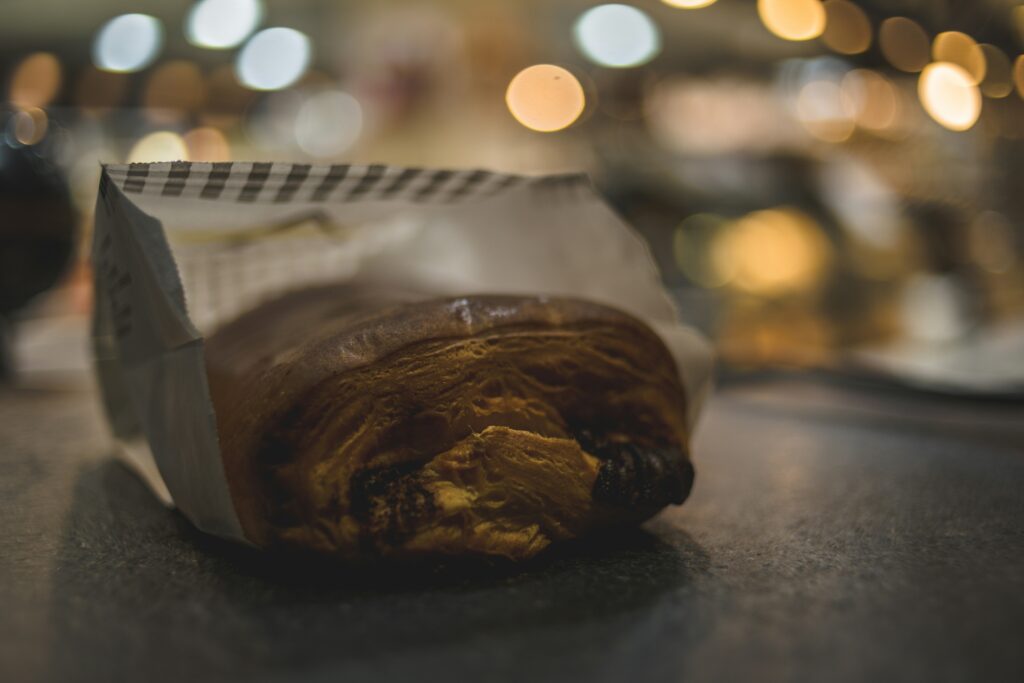
Take the simple act of choosing a classic deli sandwich or a batch of shortbread cookies. When those products are made with high-quality ingredients and traditional methods, they carry the weight of craftsmanship. It’s the difference between eating a perfectly uniform, plastic-wrapped pastry and one that bears the subtle, unmistakable imperfections of being mixed, shaped, and baked by a skilled person. That human touch is the true “comfort factor.”
Our emotional dependence on food is heavily influenced by association. As an article on the topic explores, food can provide comfort because it is often tied to feelings of being nurtured. Whether it’s chicken soup when you’re sick or a special dessert after a tough day, those foods evoke positive memories of care and security. This is why a classic, real-deal chicken salad sandwich or a cake made from scratch provides a fundamentally deeper sense of satisfaction than something engineered for a two-minute turnaround.
The Economics of Real Food
Choosing authenticity over ultra-convenience is often viewed as a luxury, but it can be seen as an investment in well-being. When we support institutions committed to traditional methods and quality ingredients—places that grind their own meats, bake their own bread, or follow handed-down recipes—we are voting for a sustainable food culture. We are rejecting the disposable nature of the modern meal and opting for something that has actual value.
In a society saturated with the synthetic flavors and uniform textures of industrial food, the places that continue to deliver simple, honest quality become necessary retreats. They offer a moment to slow down and savor something real. They remind us that the best things in life are not the fastest, but the ones that take time.
So, the next time you find yourself reaching for the quickest, easiest option, pause and ask yourself what you’re really craving. Is it speed, or is it connection? Is it mere fuel, or is it comfort, care, and quality? More often than not, the true answer leads us away from the flashing signs of the fast-food world and toward the places where simple, genuine food is made with a human hand and an enduring recipe.