The Hidden Impact of Better Organisation on Everyday Storage Spaces
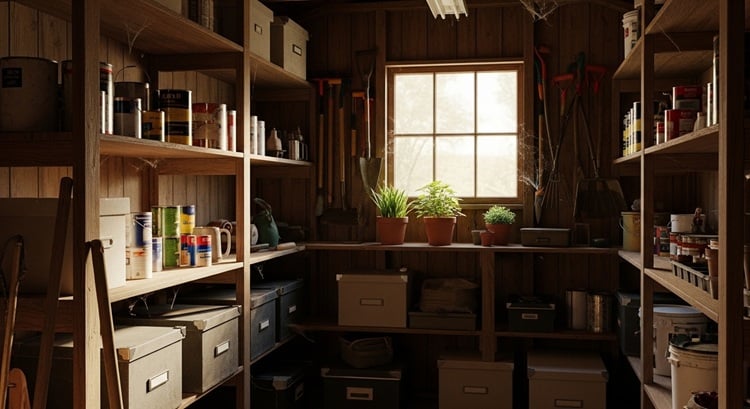
A storage space can be large, well built and perfectly weatherproof, yet still become frustrating to use if everything inside it ends up stacked, buried or difficult to reach. That’s one reason shed shelves often make such a noticeable difference. They do more than create extra room. They change how people use the space day to day, making it easier to keep track of tools, supplies and seasonal items without turning every visit into a search exercise.
This matters because most storage problems are not really about a lack of square footage. They come from poor visibility, awkward access and the slow build-up of clutter. A shed might technically hold everything it needs to, but if the items you want are hidden behind three other things, or piled in a corner where they can’t be reached quickly, the space stops being genuinely useful.
Why Floor Space Disappears So Quickly
Sheds tend to collect a mixture of items that vary wildly in size and frequency of use. Gardening tools, seed trays, plant food, paint tins, extension leads, pots, screws, sports equipment and half-used bags of compost often end up sharing the same limited footprint. When those items are all stored at ground level, the shed becomes crowded surprisingly quickly.
The problem is not just that the floor fills up. It is that once a few larger items are placed in front of smaller ones, visibility disappears. Things get forgotten, duplicated or damaged simply because they are no longer easy to see. People often assume they need more storage when what they really need is better use of the space they already have.
Vertical organisation changes that equation. Once items can be separated by type, height or frequency of use, the shed becomes easier to navigate and maintain.
The Difference Between Storage and Usability
There is an important distinction between a shed that stores things and a shed that works well. Usability comes down to how quickly items can be found, how easy they are to return to their proper place and whether the overall layout supports everyday routines.
If commonly used tools are awkward to reach, people stop putting them away properly. If smaller items are scattered among larger ones, tidiness tends to collapse over time. Disorder usually doesn’t arrive all at once. It creeps in through minor inconveniences that encourage shortcuts.
Better organisation reduces that friction. When there is a clear place for hand tools, plant care products or DIY supplies, tidying up becomes simpler and more natural. The shed supports routine rather than fighting against it.
Why Organisation Saves More Than Time
The most obvious benefit of a well-organised shed is speed. You can find what you need without hunting through boxes or shifting heavy items around. Over weeks and months, that saved time adds up.
But organisation also protects equipment and materials. Items stored properly are less likely to be knocked over, crushed or exposed to damp corners. Paint tins are less likely to leak onto other supplies. Packets of bulbs or seeds are easier to keep dry. Smaller hand tools avoid disappearing into piles where rust and damage become more likely.
There is also a financial benefit in avoiding duplication. People often buy replacements for items they already own but can’t locate. When everything has a visible, logical home, that waste becomes far less common.
Small Changes That Improve Everyday Habits
One of the interesting things about storage is how strongly it affects behaviour. A well-laid-out shed encourages better habits almost without effort. When tools are easy to access, small gardening jobs feel quicker to start. When materials are organised, planning a weekend project becomes less of a chore.
This can have a knock-on effect on how outdoor spaces are used more broadly. Gardens are maintained more consistently when the equipment needed is ready to hand. Repairs are tackled sooner when supplies are not buried in a disorganised heap. The storage space becomes part of the flow of everyday life rather than a place people avoid until absolutely necessary.
Making Limited Space Feel More Manageable
Not every shed is especially large, and not every household has the option of simply upgrading to a bigger one. That makes internal organisation even more important. Good use of height can transform a compact shed from cramped and frustrating into something surprisingly efficient.
The real advantage is not just neatness for its own sake. It is control. A well-organised storage space feels easier to manage, easier to maintain and more reliable over time. Instead of treating the shed as a dumping ground, people begin to use it as a functional extension of the home and garden.
That shift is often where the biggest difference is felt, not in how much the shed can technically hold, but in how much easier it becomes to live with.