A Complete Guide to ERP Development for Growing Businesses
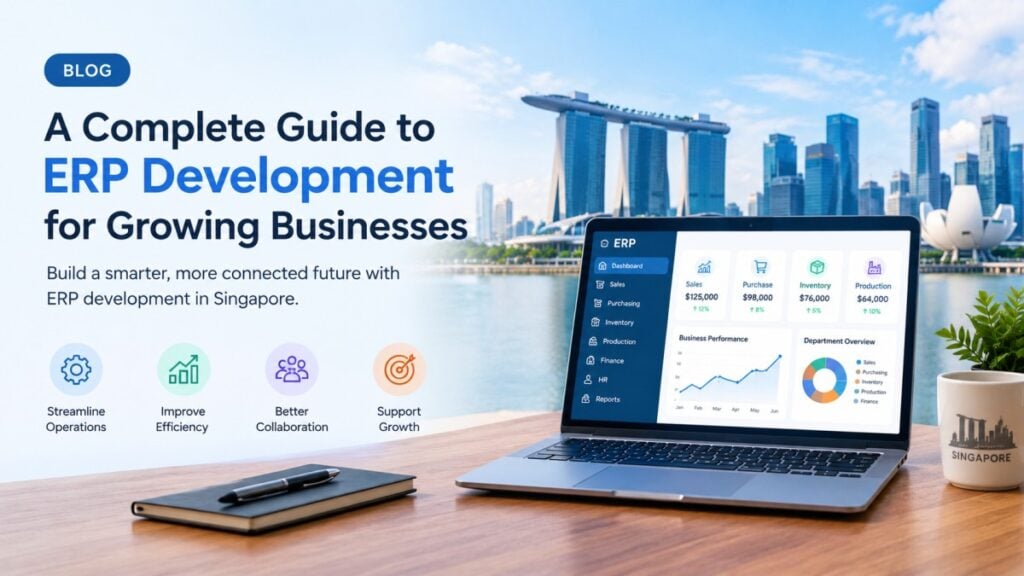
Business growth brings new opportunities, but it also creates operational challenges. As a company gains customers, hires employees, and expands its product range, managing information across separate applications can become increasingly difficult. Teams may struggle with outdated records, duplicated work, delayed reports, and limited visibility into daily operations.
Enterprise Resource Planning (ERP) software helps address these challenges by connecting essential business functions within a unified system. For growing companies, the goal is not simply to introduce new software but to build a reliable operational foundation that can support future expansion.
What Is ERP Development?
ERP development involves designing, customizing, or integrating software that helps a business manage its core activities. Depending on its requirements, an ERP system may include accounting, inventory management, purchasing, sales, customer information, human resources, and production planning.
Instead of maintaining separate records for every department, employees can work with connected information. This reduces unnecessary data entry and makes it easier for managers to understand how different business activities affect one another.
Businesses considering ERP development in Singapore can choose a solution based on their operational structure, industry requirements, existing technology, and long-term plans.
Why Growing Businesses Need ERP Software
Small businesses can often manage operations with spreadsheets and individual applications. However, these methods may become less effective when transaction volumes increase and departments require access to the same information.
An ERP system helps businesses establish consistent workflows, organize records, and improve coordination. For example, when a sales order is confirmed, the system can help the relevant teams review stock availability, purchasing requirements, delivery arrangements, and financial records.
This connected approach gives growing companies a clearer view of their operations without relying on repeated manual updates.
Essential Features of a Business ERP System
1. Financial Management
Financial tools help businesses organize invoices, expenses, payments, and account records. Managers can review financial performance more easily and prepare reports using information maintained within the system.
2. Inventory and Purchasing
Inventory management provides visibility into available stock, incoming supplies, and product movements. Purchasing functions help teams manage supplier details, purchase orders, and material requirements.
These capabilities are especially useful for businesses that handle multiple products or operate across several storage locations.
3. Sales and Customer Management
Connecting sales activities with inventory and finance helps teams manage customer orders more consistently. Employees can review order progress, check product availability, and access relevant customer information without switching between disconnected systems.
4. Reporting and Business Insights
ERP reporting brings information from different departments into a more organized view. Businesses can monitor sales performance, operating expenses, stock movements, and other important indicators to support better planning.
Custom ERP Development vs. Ready-Made Software
Choosing between customized and ready-made ERP software depends on the complexity of the business.
Ready-made solutions may suit companies whose requirements closely match standard features. They can provide a quicker starting point, although customization and integration may still be necessary.
Custom ERP development is useful when a business has specialized workflows, complex approval processes, industry-specific requirements, or integration needs that standard products cannot adequately address.
Before making a decision, companies should compare implementation costs, flexibility, maintenance requirements, scalability, and the availability of technical support.
How ERP Development Works in Singapore
A successful ERP project begins with understanding the business rather than immediately selecting software.
Step 1: Assess existing operations. Identify repetitive tasks, information gaps, and processes that require improvement.
Step 2: Define requirements. Decide which departments, features, reports, and integrations the system must support.
Step 3: Select the right approach. Evaluate existing ERP products, customization options, and fully tailored development where appropriate.
Step 4: Configure and test. Prepare business data, establish workflows, and test important transactions before deployment.
Step 5: Train employees. Help users understand their responsibilities and how the new system supports their work.
Step 6: Review performance. Measure improvements and introduce additional features as business needs evolve.
Professional ERP development in Singapore should also consider data protection, access permissions, integration reliability, and applicable regulatory requirements.
Common Mistakes to Avoid
Businesses can encounter difficulties when they introduce too many features at once, overlook employee training, or transfer inaccurate information into a new system. Unclear project objectives and unrealistic budgets can also create problems.
A more practical approach is to prioritize essential requirements, involve employees early, test workflows thoroughly, and plan for ongoing maintenance. Starting with clearly defined business goals helps keep the project focused.
Conclusion
ERP software can help growing businesses organize information, connect departments, and manage increasing operational complexity. The right solution should reflect current requirements while allowing room for future development.
Companies exploring ERP development in Singapore should evaluate their processes carefully before choosing a technology partner or implementation strategy. SerpentCS helps businesses explore ERP solutions aligned with their workflows, integration requirements, and growth objectives, supporting more organized operations as their businesses develop.