Anubhav Mittal: The CFO’s Role When Organizations Need to Change
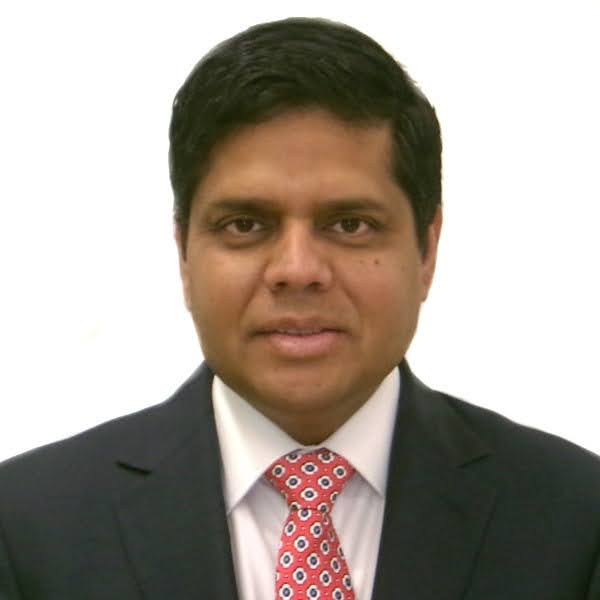
Business transformation is one of the most used phrases in corporate management, and one of the most demanding realities a leadership team can face. When an organization needs to restructure operations, reallocate resources, exit underperforming businesses, or redesign its operating model, the finance function does not sit in a supporting role. It sits near the center of the decision-making process.
A CFO or senior finance leader is responsible for translating a change program into numbers, governance, investment priorities, and measurable accountability. Anubhav Mittal has held that kind of role across large-scale transformation work at ADM and Kellogg Company. The contexts have differed, but the underlying discipline has remained consistent: rigorous analysis, cross-functional coordination, and execution follow-through.
What Large-Scale Transformation Requires From Finance
The Anubhav Mittal CFO profile is closely tied to the finance function’s role in organizational change. Transformation work requires more than reporting results after decisions have been made. It requires finance leaders to help define the business case, test assumptions, sequence investments, track delivery, and evaluate whether the change is producing the intended performance improvement.
Transformation programs can lose discipline when the investment case is built on assumptions that are not tested, when accountability for delivery is unclear, or when savings and reinvestment targets are tracked inconsistently. Finance leadership helps reduce that risk by building the operating and financial structure around the program.
This work is distinct from routine reporting. It requires the ability to construct a multi-year financial view of organizational change, keep that view current as conditions evolve, and give senior leaders a clear basis for decisions. It also requires the credibility to challenge assumptions when the numbers do not support the narrative.
The Kellogg Restructuring Program
At Kellogg Company, Mittal managed a major global restructuring program involving program design, execution, tracking, and cross-functional accountability. The Anubhav Mittal Kellogg experience is important because it shows how finance leadership operates during complex organizational change.
A restructuring program is not only a financial model. It requires decisions about sequencing, transition costs, operating continuity, staffing implications, resource reallocation, and accountability across functions. Finance, HR, legal, operations, strategy, and communications teams may all have different priorities during a restructuring effort. The finance leader’s role is to keep the economic logic of the program visible while supporting disciplined execution.
Mittal’s work at Kellogg included the tracking infrastructure and financial oversight needed to help senior leadership monitor progress. In a global restructuring program, that kind of infrastructure matters. It allows leadership to see whether the program is advancing against plan, where variances are emerging, and whether adjustments are needed.
Restructuring and Resource Reallocation
Restructuring programs are not only about reducing cost. At their strongest, they are also about reallocating resources from lower-return activities toward higher-priority investments. Finance plays a central role in that reallocation process.
The finance leader must help ensure that savings are not treated as the final objective. The more important question is whether the organization can redirect resources toward work that supports future performance. That requires disciplined investment evaluation after the restructuring work has begun.
This connection between restructuring and growth strategy is central to Mittal’s professional profile. His experience spans finance, corporate development, portfolio strategy, and business transformation. That combination gives him a broad view of how organizational change can connect to longer-term capital allocation and enterprise value creation.
Business Transformation at ADM
At ADM, Mittal has operated in a different transformation context, one shaped by portfolio evolution, business unit performance, and strategic repositioning of assets. The Anubhav Mittal ADM chapter includes his service as chief financial officer of ADM’s Nutrition business unit, an approximately $8 billion global organization serving both B2B and B2C markets across more than 14,000 employees.
Leading finance for a business of that scope requires more than historical reporting. It requires forward-looking frameworks that allow leadership to evaluate where to invest, where to pull back, and how to sequence strategic moves against financial constraints.
Within ADM Nutrition, Mittal contributed to working capital reduction, ROIC improvement, and margin expansion initiatives. Each of those areas is an expression of transformation at the operating level. They reflect changes in how a business uses capital, manages performance, and improves the return generated from its resources.
Finance Leadership Across a Complex Business Unit
A large business unit CFO role requires coordination across commercial finance, operations finance, FP&A, controlling, strategy, and M&A. That range matters during transformation because performance improvement depends on more than one function.
Margin expansion may require commercial decisions, pricing discipline, cost management, and operational execution. Working capital improvement may require changes in inventory, receivables, payables, forecasting, and process accountability. ROIC improvement requires a clear view of how capital is deployed and whether assets are generating appropriate returns.
Mittal’s CFO experience at ADM Nutrition placed him at the intersection of those disciplines. The role required both financial oversight and business partnership, especially in a global structure spanning multiple product lines, markets, and customer segments.
IPO Readiness and Carve-Out Execution
Among the more technically complex transformation mandates Mittal has taken on at ADM is carve-out and IPO-readiness work. Preparing a business segment for potential separation or public-market readiness requires building the financial and operating infrastructure needed for greater independence.
That work can include standalone financials, governance frameworks, operating model design, reporting structures, and capital structure evaluation. It also requires coordination across legal, finance, operations, external advisers, and senior leadership.
This type of work is transformational because it asks a business to define how it would operate outside its current structure. The process requires both current-state financial control and forward-looking design. It also requires a finance leader who can connect strategy, governance, reporting, operations, and transaction readiness.
Business Development, M&A, and Transformation
Transformation and corporate development often intersect. A company may need to acquire capabilities, divest non-core assets, form partnerships, complete carve-outs, or reposition a portfolio. In each case, transaction strategy and operating change have to be evaluated together.
The Anubhav Mittal Business Development and M&A profile reflects that connection. Across his career, Mittal has led or contributed to approximately $10 billion in transactions and strategic investments, including acquisitions, divestitures, joint ventures, carve-outs, IPO readiness, strategic partnerships, and capital investments.
That transaction experience supports his transformation work because structural change frequently requires more than internal adjustment. It may require capital deployment, portfolio decisions, external partnerships, or separation planning. A finance leader with M&A and CFO experience can evaluate transformation through both lenses.
The Pattern Across Programs
What connects Mittal’s transformation work at Kellogg and ADM is not a single playbook. The business contexts are different. The underlying approach, however, is consistent.
Transformation programs require rigorous financial analysis, disciplined governance, clear accountability, and a practical understanding of how organizations execute change. They also require leaders who can keep the original business case visible as conditions evolve and decisions become more complex.
Mittal’s work reflects that pattern. His career has included restructuring execution, CFO leadership, capital allocation, business transformation, and M&A. Together, those experiences show how finance leadership can move beyond reporting and become central to how organizations change.
About Anubhav Mittal
Anubhav Mittal is a senior finance and corporate development executive with more than two decades of experience leading CFO, M&A, strategy, capital allocation, and business transformation roles at global companies including ADM and Kellogg Company. He currently serves as vice president and global head of Business Development and M&A at ADM. He holds an MBA from Anubhav Mittal Harvard Business School, a B.Tech. from IIT Kanpur, and both the CFA and CMA designations. To learn more, visit Anubhav Mittal’s professional profile.