The Repair That Makes It Worse: Inside Philadelphia’s Historic Chimney Crisis
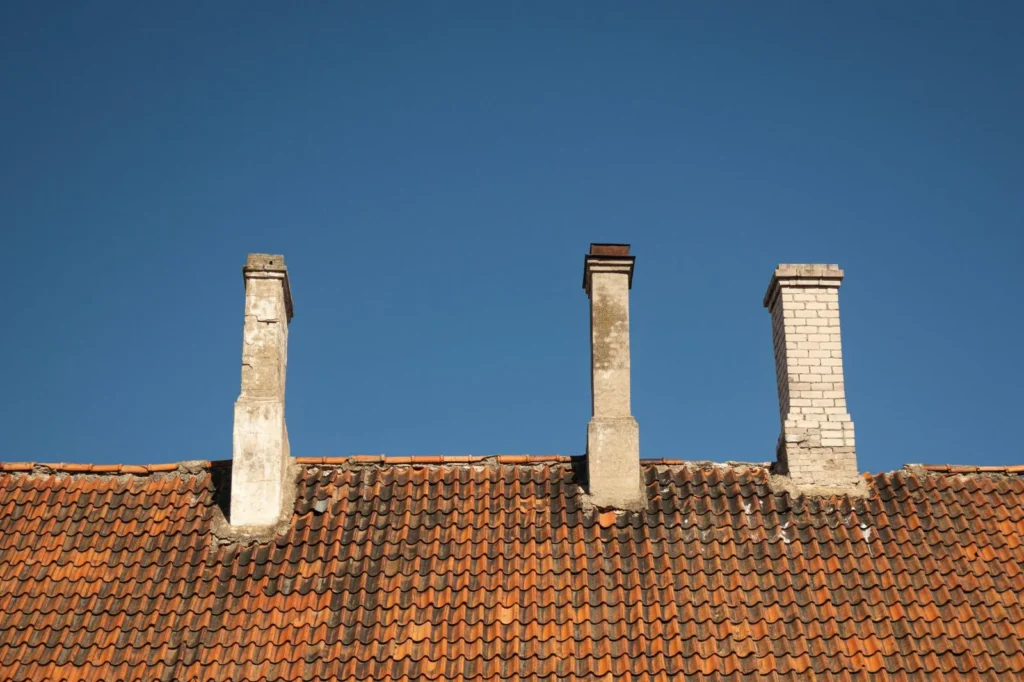
Photo By: Nikola Johnny Mirkovic
Walk down any pre-1929 block in Philadelphia, Boston, New York, or Baltimore and you’ll likely find a chimney that’s been “fixed” in a way that’s quietly making things worse. According to Joe Ochal, founder of Chimney Scientist, one of the largest chimney companies in America, it’s one of the most common, and least understood, mistakes in the industry.
“Self-healing mortar, or historic mortar, is why Europe is still standing and 70% of all modern bridges in America are falling apart,” Ochal says.
It’s a bold claim, but it points to a real and often-overlooked problem: most contractors repairing century-old masonry are using materials that were never designed for it.
Mortar Isn’t Mortar
Homeowners tend to assume all mortar is interchangeable. It isn’t and that assumption causes real damage, according to Ochal.
Historic lime mortar, made from lime, sand, and water, was the standard binding material for masonry construction up until the early 20th century. The lime was burned low and slow, over several days, preserving key chemical properties.
“The analogy I like to use is pizza,” Ochal explains. “If I cook a pizza for 10 minutes at 700 degrees, it’s going to taste delicious, chewy, and flavorful with lots of texture and complexity. If I cook that pizza for three minutes at 3,500 degrees, it’s still pizza, but it’s burned to a crisp and inedible. That’s the difference between historic lime and modern lime.”
Portland cement replaced lime mortar in residential construction beginning in the early 1900s. It’s harder, denser, and cures rock-solid, qualities that sound like upgrades, but that work against older masonry rather than for it.
“Older masonry was built to move, breathe, and shed water in a specific way, with softer brick and lime mortar working together,” Ochal says. “Once you introduce modern materials that block movement and breathability into that system, you’re not repairing it, you’re fighting it.”
When the Fix Becomes the Problem
The consequences of using the wrong material aren’t cosmetic. Portland cement is significantly harder than the historic brick it’s often applied to, and it’s essentially impermeable, meaning moisture trapped inside a chimney has nowhere to go.
“It gets forced to find another way out, usually straight through the face of the brick, or it stays inside and freeze-thaws,” Ochal says. “That’s what causes spalling, the brick literally starts blowing apart from the inside.”
Ochal sees the pattern play out on repeat: a homeowner has a leak, hires a contractor, gets the chimney repointed or coated with masonry stucco and the leak goes away. For a while.
“The leak goes away for approximately two to three years, and then it suddenly returns at a much greater rate,” he says. “The new material is now trapping the moisture worse than the original material, and the rainwater follows gravity and the path of least resistance directly into the home behind the walls.” It happens, he says, several times a month.
A Philadelphia Problem
Few cities illustrate the stakes better than Philadelphia, where entire blocks of rowhomes predate 1929, and with them, an entire building system most contractors were never trained on.
“This is a very common issue,” Ochal says. “Walk down any pre-1929 block in Boston, New York, DC, Baltimore, Philadelphia, and there will be incompatible building materials on historic buildings.”
Part of the problem is geographic. The Chimney Safety Institute of America, the industry’s primary certification body, is headquartered in Plainfield, Indiana, a region with far less pre-1929 housing stock than the Northeast, and correspondingly less demand for historic lime expertise among suppliers and trainers.
“There are little to no suppliers stationed in the West, Midwest, Northwest, or South region,” Ochal says. “The oldest part of the country is in the northeast, where the vast majority of homes were built before 1929. There’s just not enough awareness around historic building materials in the rest of the country.”
A Narrow Field of Expertise
Part of what makes this gap hard to close is how few resources exist to close it. Ochal estimates there are only a handful of manufacturers and distributors of historic lime mortar in the entire country, and certification in the space is rare enough that he can name his competition.
“In the entire U.S., I’m only aware of one other chimney company that holds a Cathedral Stone certification,” he says. “No chimney supply companies carry historic lime products at this time.”
Chimney Scientist holds certifications from both Cathedral Stone Products and Limeworks, two of the country’s leading historic masonry suppliers, and runs weekly internal training for its inspectors.
“Identifying historic lime mortar versus Portland cement is not always straightforward,” Ochal says. “To this day, when I go into the field, I’ll see scenarios that are confusing and difficult to diagnose. Education doesn’t stop.”
Why the Skill Isn’t Disappearing. It’s Just Resurfacing
It would be easy to frame this as a story about vanishing craftsmanship. Ochal sees it differently. Historic lime mortar wasn’t just forgotten by American tradespeople, it was largely unavailable in the U.S. from the 1940s through the 1990s, forcing generations of masons to work almost exclusively with Portland cement, sometimes adapting it as best they could by increasing sand content to approximate the permeability of the original material.
“I think we’re currently in a renaissance,” Ochal says. “Young people are realizing that working with your hands has value, and for the first time, thanks to the internet and AI, people can research and learn about incompatible building materials and historic lime products that weren’t available in this country until 30 years ago.”
His hope is that historic lime training eventually becomes part of the standard CSIA certification curriculum, closing a gap that, for now, homeowners largely have to navigate on their own.