A Deal with the Devil: Bulger, the FBI, and the Investigation That Broke the Trust
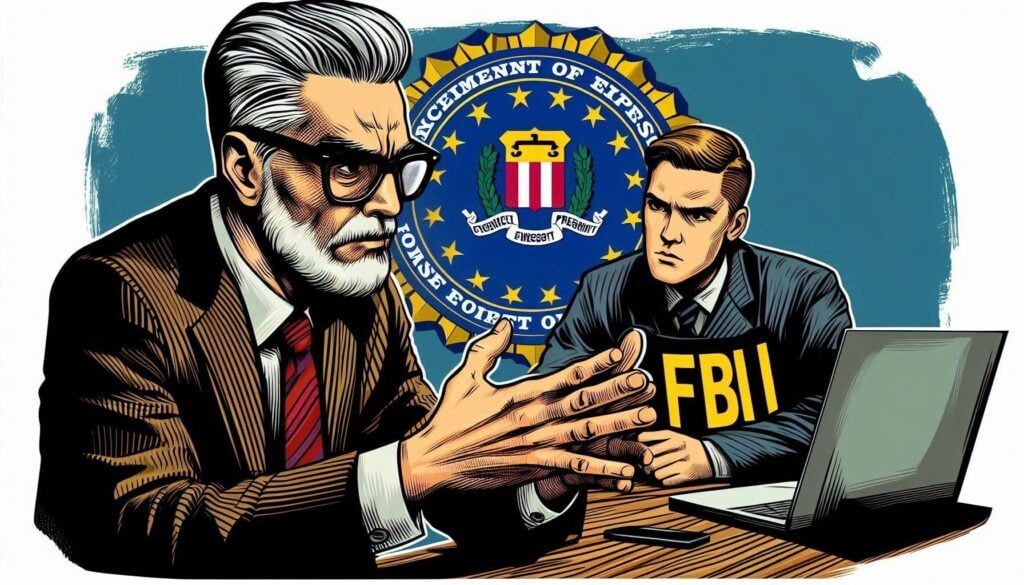
How James “Whitey” Bulger exploited his role as a top-echelon informant, corrupted federal protection through Agent John Connolly, and finally became the target of investigators who refused to let the Bureau’s secret shield hold.
WASHINGTON, DC
The Whitey Bulger scandal was not only a story about a ruthless Boston gangster, but it became one of the most damaging American law enforcement failures of the modern organized crime era.
For years, Bulger ruled the South Boston underworld while simultaneously maintaining a relationship with the FBI, a relationship that federal records, courtroom testimony, and later prosecutions showed had allowed a violent criminal enterprise to thrive under the shadow of official protection.
The moral collapse was not subtle because the same institution charged with fighting organized crime tolerated, mishandled, and in some cases protected one of New England’s most dangerous mob figures while victims, witnesses, rival investigators, and honest police officers were left exposed.
When Bulger was finally convicted in 2013, the Justice Department’s account of the verdict turned decades of rumors into a formal record of racketeering, murder, extortion, narcotics, money laundering, and firearms crimes.
The top-echelon informant became the predator who used the system built to control him.
Bulger’s FBI relationship began inside a law enforcement strategy that prioritized intelligence against the Italian Mafia, which federal authorities considered the larger organized crime target during the period when Bulger and Stephen Flemmi became valuable sources.
The theory behind top-echelon informants was that dangerous criminals could provide information against even more dangerous criminal organizations, giving federal agents insight into mob hierarchy, internal conflict, gambling operations, loansharking, corruption, and violence that might otherwise remain hidden.
In practice, Bulger turned that strategy against the government because he learned that information could be used as currency, protection, leverage, and a weapon against rivals who lacked similar access to federal handlers.
The relationship gave him an extraordinary advantage, because he could provide enough information to remain valuable while allegedly receiving warnings, investigative intelligence, and confidence that law enforcement pressure would fall more heavily on enemies than on his own organization.
Bulger denied being an informant in the ordinary sense, but the official record and testimony around his case placed him inside the Bureau’s informant system, where the label mattered less than the practical protection he received.
Bulger used the FBI’s Mafia obsession to help clear the field for Winter Hill.
The FBI’s focus on dismantling the Italian Mafia created a strategic opening for Bulger, because he could position himself as a useful source while his Winter Hill organization expanded influence in gambling, extortion, narcotics, loansharking, and underworld enforcement.
The arrangement allowed Bulger to exploit law enforcement priorities because every rival weakened by federal attention created more room for his own network to consolidate control across South Boston and the surrounding criminal territory.
In the underworld, information is power, and Bulger’s access to federal attention gave him a form of power that ordinary gangsters could not match because they operated without knowing which investigations were moving, which wires were active, and which rivals were vulnerable.
This was the practical brilliance and moral horror of the arrangement, because Bulger did not merely hide from the FBI; he used the Bureau’s institutional ambitions to strengthen his position.
The result was not a safer Boston, because the weakening of one criminal faction coincided with the protection and empowerment of another that relied on murder, intimidation, drug profits, and extortion.
Agent John Connolly became the human bridge between the Bureau and the mob.
John Connolly was not just another FBI agent assigned to organized crime, because his South Boston background, personal history, and relationship with Bulger placed him inside the neighborhood loyalties that shaped the scandal.
Connolly grew up in the same world that produced Bulger, and that proximity became one of the most dangerous facts in the case, because professional boundaries blurred into personal loyalty, neighborhood mythology, and corrupt tolerance.
Federal prosecutors later portrayed Connolly as an agent who protected Bulger and Flemmi, warned them about investigations, and helped shield them from consequences while their criminal organization continued to operate.
The damage was profound because Connolly’s conduct did not merely represent one agent’s betrayal, but exposed how an informant program could become corrupted when handlers valued source production over victim protection and institutional integrity.
Once an agent begins protecting a source from murder investigations, witness exposure, and rival law enforcement pressure, the informant relationship stops being a tool and becomes a criminal partnership with a badge attached.
The blind eye turned to murder became the scandal’s darkest center.
The most unforgivable part of the Bulger informant scandal was not that the Bureau used criminals as sources, because law enforcement agencies have long relied on informants in difficult investigations.
The unforgivable part was that Bulger’s relationship with corrupted handlers allowed violence to continue while victims and witnesses remained vulnerable, creating the perception that some lives were sacrificed for intelligence value.
Bulger’s organization was eventually linked in court to murders and repeated violence, and the public record showed that he was not merely a talker, gambler, or neighborhood fixer, but a violent racketeer whose power depended on fear.
The informant arrangement created a moral inversion, because a man presented as useful to law enforcement was simultaneously harming the community that law enforcement existed to protect.
Every murder connected to the Bulger enterprise became more than a mob killing because it raised the question of whether corrupted protection, leaked intelligence, or institutional blindness had helped make the violence possible.
The Connolly scandal broke faith with every honest investigator in Boston.
For honest investigators, the Bulger case was demoralizing because state police, DEA agents, local officers, and federal prosecutors often faced obstacles that seemed inexplicable until the FBI relationship became clearer.
Investigations that should have moved forward stalled, surveillance targets suddenly became cautious, and law enforcement efforts outside Connolly’s orbit repeatedly encountered signs that Bulger and Flemmi knew too much.
That pattern created suspicion among other agencies, because no criminal organization should consistently understand investigative pressure unless someone inside the system is leaking information.
The scandal damaged trust across law enforcement because investigators could no longer assume that sensitive information shared through official channels would remain protected from the very targets being pursued.
Once agencies begin fearing that their own partners may be compromised, the fight against organized crime becomes dramatically harder, because every operation must account not only for criminal surveillance but for institutional betrayal.
The DEA and Massachusetts State Police helped expose what the FBI could not control.
The eventual pressure against Bulger did not come from the protected informant system that had enabled him, because it came from investigators outside the corrupted relationship who refused to accept the myth of untouchability.
DEA agents, Massachusetts State Police investigators, and federal prosecutors began looking at Bulger and Flemmi not as valuable sources but as criminal targets, which changed the direction of the case and threatened the protection that had surrounded them.
These investigators saw the same facts differently because they were not invested in preserving Bulger’s value as an informant, and they were less willing to accept excuses that treated Winter Hill violence as a manageable cost of fighting the Mafia.
The tipping point came when outside pressure made it impossible for the old arrangement to remain hidden, because the people pursuing Bulger were not willing to defer indefinitely to the Bureau’s secret claims.
The scandal became a case study in why law enforcement power must be checked by independent review, because a closed system protecting its own source can become blind to the crimes unfolding directly in front of it.
The secret investigation finally treated Bulger as the target, not the asset.
Once investigators began targeting Bulger directly, the structure of his protection started to collapse because the old narrative that he was useful to the government no longer outweighed the evidence of his criminal power.
That shift was crucial because it changed the moral language of the case, replacing the idea of a difficult but necessary informant with the reality of a violent racketeer who had manipulated the federal government.
Bulger fled Boston in 1995 after being warned of a pending indictment, turning the protected source into a fugitive and exposing the catastrophic consequences of allowing a criminal relationship to compromise law enforcement judgment.
His flight transformed the scandal into a national humiliation because a man accused of years of violent crime had escaped before prosecutors could place him in custody.
The eventual FBI account of Bulger’s capture showed how much damage endured because he remained on the run for 16 years before being arrested in Santa Monica.
The protected informant became one of America’s most wanted fugitives.
Bulger’s years as a fugitive revealed the same traits that had allowed him to survive in Boston, including discipline, cash use, aliases, caution, and an ability to live quietly while public attention searched elsewhere.
His capture in California in 2011 ended one chapter, but it did not erase the deeper institutional failure because the country was still left asking how such a figure had escaped prosecution for so long.
The answer could not be reduced to Bulger’s cleverness, because the scandal showed that his survival depended in part on corrupt access, leaked information, and a law enforcement culture that valued informant production over accountability.
By the time he stood trial, Bulger was no longer merely a mob boss because he had become the symbol of a federal system that had lost control of its own source.
That is why his conviction felt larger than a single criminal case: it put both the gangster and the compromised system around him on trial in the public imagination.
The victims were forced to live with both mob violence and government failure.
The families of Bulger’s victims carried a burden deeper than ordinary grief because they had to confront not only the violence of the gang, but the possibility that institutions had failed to stop it when they had the chance.
For those families, the informant scandal was not an abstract policy failure, because it raised painful questions about whether warnings were ignored, whether witnesses were exposed, and whether a dangerous man was allowed to keep operating.
Victims of organized crime often suffer in silence because fear suppresses testimony, but Bulger’s case added the terror that silence might be reinforced by corruption inside the very system meant to offer protection.
That is why the scandal still matters because it shows how institutional failure can multiply criminal harm, turning one gang’s violence into a generational wound.
A lawful privacy structure should protect victims, witnesses, families, and exposed individuals from danger, while criminal secrecy protects predators from accountability and leaves everyone else more vulnerable.
Bulger’s informant scandal remains a warning about corrupted anonymity.
Bulger’s power depended on secrecy, aliases, cash, corrupted contacts, neighborhood intimidation, and selective visibility, which allowed him to move between public myth and hidden violence.
That kind of criminal anonymity is fundamentally different from lawful privacy because it hides accountability, whereas lawful privacy protects legitimate people from stalking, extortion, kidnapping, public exposure, and unnecessary personal risk.
For individuals seeking legitimate protection from dangerous actors, anonymous living strategies are built around compliance, documentation, secure communication, private residence planning, and lawful access to banking.
The Bulger scandal shows what happens when secrecy protects the wrong person, because the hidden relationship between a gangster and law enforcement did not make the public safer.
It made victims easier to silence, rivals easier to target, witnesses easier to intimidate, and the truth harder to reach.
The Bureau’s failure became a national lesson in source control.
Informants can be valuable, but Bulger’s case demonstrated that source management without ethical boundaries can be catastrophic, as criminal sources are skilled at manipulating those who believe they are managing them.
A source who commits violence, receives warnings, pays handlers, influences investigations, or uses government protection against rivals is no longer simply providing intelligence.
He is exploiting the state, converting law-enforcement access into criminal capital, and making the public pay the price for information that may serve the source more than the government.
The Bulger case forced a broader reckoning with how agencies document informants, supervise handlers, share intelligence, protect witnesses, and prevent source relationships from becoming private arrangements beyond meaningful review.
That lesson remains urgent because any security system that depends on secrecy must also have accountability, or secrecy becomes the environment where corruption grows.
Bulger’s final years did not close the scandal.
Bulger was sentenced to life in prison after his conviction, but his death in federal custody in 2018 ensured that violence remained attached to his name until the end.
A Reuters report on later prosecutions tied to Bulger’s prison killing described continued legal fallout from the fatal attack, underscoring how Bulger’s life and death remained tangled in violence, informant stigma, and institutional scrutiny.
His killing did not resolve the questions raised by his rise because the real scandal had never been only that a gangster murdered and extorted his way through Boston.
The deeper scandal was that he did so while a federal relationship helped create the impression that he was protected from consequences.
That unanswered moral damage remains part of his legacy because the victims’ families were forced to confront both the mob and the machinery that failed to contain it.
The Bulger case shows why lawful identity planning must never become evasion.
The Bulger story contains every corrupt version of hidden identity, including aliases, cash discipline, secret protection, informant files, false narratives, and institutional blindness that allowed a violent man to operate behind layers of concealment.
Lawful identity planning is the opposite because it requires legitimate documentation, compliance review, banking continuity, tax alignment, truthful disclosure where required, and protection from criminals rather than partnership with them.
For individuals seeking a lawful reset after threat, exposure, extortion, stalking, or reputational danger, new legal identity planning must be built to withstand scrutiny rather than avoid it.
That distinction matters because privacy becomes legitimate only when it protects lawful people from harm without hiding crimes, evading courts, defrauding institutions, or obstructing investigators.
Bulger’s life shows what happens when concealment becomes a weapon, because secrecy without accountability eventually becomes a shield for violence.
The investigation that broke the trust also exposed the cost of looking away.
The eventual case against Bulger proved that no criminal shield lasts forever, but it also proved that delayed accountability can leave decades of damage behind.
By the time investigators outside the corrupted protection network finally forced the issue, victims had died, witnesses had been intimidated, families had suffered, and public trust in federal law enforcement had been severely damaged.
The case changed the way Americans understood informant relationships because it showed that the war against organized crime could become morally compromised when agencies accepted too much criminality from people they considered useful.
The lesson remains harsh because Bulger did not defeat the FBI by hiding from it; he defeated it for years by convincing parts of it that he was worth protecting.
In the end, the deal with the devil did not destroy only Bulger’s enemies, because it damaged the credibility of the system that made the deal possible.