Blood and Boxing: How the Kinahan Cartel Infiltrated the Highest Levels of Global Sports
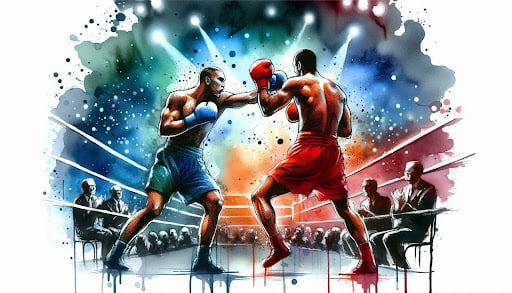
An inside look at the cartel’s sportswashing strategy, the controversial rise and fall of MTK Global, and how international law enforcement forced professional boxing to confront its ties to one of Europe’s most notorious crime networks.
WASHINGTON, DC.
Professional boxing has always lived close to danger because the sport rewards money, charisma, loyalty, silence, private influence, and the kind of informal power that can make a man important long before anyone asks where his authority came from.
For Daniel Kinahan, the boxing world offered something more valuable than ringside seats because it offered legitimacy, celebrity access, athlete loyalty, television visibility, and a public-facing identity that could compete with years of law enforcement claims about organized crime.
The result became one of the most uncomfortable scandals in modern sport, as a man described by U.S. authorities as a senior figure in the Kinahan Organized Crime Group rose through boxing’s elite circles while the cartel behind his name was accused of narcotics trafficking, money laundering, violence, and international criminal command.
The Kinahan strategy was not only about boxing; it was about legitimacy.
Sportswashing usually describes the use of athletics to soften reputations, distract from controversy, and convert wealth or influence into public respectability, and the Kinahan case showed how that strategy could operate inside a fragmented combat sports economy.
Boxing was especially vulnerable because the sport is decentralized, personality-driven, and heavily dependent on managers, advisers, promoters, sanctioning bodies, broadcasters, gyms, agents, sponsors, and private dealmakers operating across borders.
Unlike a tightly controlled league, professional boxing often depends on informal relationships, handshake influence, fighter loyalty, and behind-the-scenes negotiations that can make power difficult to locate and even harder to regulate.
That environment created room for a controversial figure to present himself as a fixer, adviser, and dealmaker while authorities continued describing him in dramatically different terms.
The scandal was not merely that an alleged crime figure liked boxing, because the deeper issue was how close he appeared to the machinery of elite prizefighting.
MTK Global became the public vehicle for influence and respectability.
MTK Global, originally linked to Daniel Kinahan’s early boxing activities, became one of the most visible management brands in the sport, representing or associating with high-profile fighters while expanding far beyond its original base.
The company’s rise mattered because boxing management is not only administrative; the right adviser can also influence opponents, purses, television opportunities, promotional relationships, rankings, contract strategy, and a fighter’s entire economic future.
As MTK’s profile expanded, the public boxing narrative around Kinahan shifted from criminal allegation to sporting influence, with fighters, promoters, and insiders discussing his role in major negotiations even as law enforcement pressure grew.
A 2022 Washington Post report on MTK Global’s shutdown described how the company ceased operations after sanctions and industry pressure made continued business increasingly difficult.
The collapse showed that legitimacy built through sport can evaporate quickly when governments, broadcasters, promoters, sponsors, and compliance teams decide that association has become too expensive.
The Tyson Fury episode made the scandal impossible to ignore.
The turning point for many casual boxing fans came in 2020, when heavyweight champion Tyson Fury publicly credited Kinahan with helping arrange a potential major fight, causing immediate scrutiny because the praise came from one of the sport’s most recognizable figures.
That moment exposed the central contradiction of the Kinahan boxing strategy, because a man accused by law enforcement of directing organized crime was being acknowledged publicly by elite athletes as a useful force in major fight negotiations.
The reaction was swift because governments, journalists, boxing insiders, and campaigners understood that public validation from a heavyweight champion could normalize Kinahan’s presence inside the sport’s highest commercial layer.
Fury later distanced himself from the controversy, but the episode had already achieved something important because it forced boxing to confront a question it had avoided for too long.
How had a figure pursued by international law enforcement become accepted enough that major names could publicly recognize his influence without immediately treating that influence as a crisis?
The U.S. sanctions campaign turned sporting association into compliance risk.
The sportswashing model began breaking apart when the United States formally sanctioned the Kinahan Organized Crime Group, describing it as a transnational criminal organization tied to narcotics trafficking, money laundering, and violence.
The official U.S. Treasury sanctions announcement changed the environment because it transformed association from reputational discomfort into a legal and financial risk for anyone subject to U.S. jurisdiction or connected to U.S. systems.
Sanctions operate differently from public criticism because they make banks, broadcasters, promoters, sponsors, lawyers, travel providers, and commercial partners ask whether continued contact could expose them to blocked assets, compliance failures, or regulatory consequences.
That pressure mattered because boxing may tolerate controversy, but mainstream broadcasters, payment processors, sponsors, and regulated institutions cannot easily tolerate sanctions risk around major events.
The moment the Kinahan name became financially radioactive, the sport’s informal tolerance began giving way to formal distancing.
MTK Global’s shutdown showed how quickly influence can become isolation.
MTK Global announced that it would cease operations after sanctions and industry distancing made its position increasingly untenable, even as the company maintained that it had faced unfair scrutiny.
That decision was one of the clearest signs that law enforcement pressure had reached the commercial bloodstream of boxing, because the brand’s survival depended on cooperation from promoters, networks, fighters, sponsors, venues, and counterparties.
Once those counterparties began stepping away, the company’s roster, deal flow, and commercial usefulness became difficult to sustain because boxing management depends on access rather than office furniture.
The shutdown did not mean every relationship vanished overnight, because fighters, trainers, agents, and advisers often move through complicated personal and professional networks.
It did mean that one of the most visible institutional structures associated with Kinahan’s boxing influence had become too toxic to continue in its previous form.
The cartel’s boxing links revealed the weakness of informal sports governance.
Professional boxing does not have one global commissioner capable of issuing unified rules, conducting centralized integrity reviews, or banning every compromised actor across all jurisdictions.
Instead, the sport is divided across sanctioning bodies, promotional companies, national commissions, broadcasters, managers, advisers, lawyers, gyms, and event-by-event approval systems that often respond slowly to reputational risk.
That fragmentation allowed the Kinahan controversy to grow because no single authority had full responsibility for asking whether a person with alleged organized crime ties should hold influence over fighters, negotiations, and commercial opportunities.
Some insiders could claim that the issue belonged to another jurisdiction, another promoter, another commission, another broadcaster, or another part of the business.
The result was a governance gap large enough for reputational laundering to operate until sanctions, media pressure, and international enforcement finally made neutrality impossible.
The fighter loyalty problem made the scandal harder to unwind.
Many fighters defended or praised figures who helped them earn money, secure opportunities, negotiate better deals, and escape exploitative contracts, which made the Kinahan controversy emotionally complicated inside the sport.
A boxer’s career is short, dangerous, and financially uncertain, so loyalty to a powerful adviser can feel rational when that adviser delivers fights, purses, media attention, and access to influential promoters.
That loyalty becomes dangerous when personal gratitude blinds athletes to the broader question of whether their success is being used to sanitize alleged organized crime influence.
The Kinahan case showed how sportswashing can operate through real benefits, because it does not always require fake affection or staged endorsements.
A criminally tainted network can gain legitimacy when people who benefited from its power speak about opportunity while avoiding the source of that power.
Boxing’s money flows made the sport attractive to criminal influence.
Major boxing events involve purses, promotional rights, broadcast deals, sponsorships, ticket sales, international venues, hospitality packages, adviser fees, training expenses, travel costs, and complex networks of payment and representation.
That financial complexity creates opportunity for legitimate profit, but it can also attract people seeking influence, access, reputation management, laundering channels, or proximity to celebrities and wealthy investors.
The sport’s tradition of private negotiation can make it difficult to determine who truly controls decisions, who receives fees, who influences matchmaking, and who benefits from a fighter’s commercial movement.
The Kinahan controversy, therefore, became a warning about how organized crime can seek legitimacy not only through ownership but through influence over relationships, introductions, negotiations, and access.
In a sport where a powerful adviser may operate behind the curtain, the curtain itself becomes part of the risk.
The sanctions campaign forced broadcasters and promoters to choose sides.
Once the U.S. Treasury acted, major industry participants could no longer treat Kinahan links as a background controversy because every commercial relationship had to be examined through compliance, reputation, and enforcement exposure.
Broadcasters and promoters depend on sponsors, payment systems, insurers, venues, regulators, and public trust, all of which can be damaged by association with a sanctioned organized crime network.
That forced the sport to move from informal discomfort to visible distancing, because silence became harder to defend once the legal framework changed.
The pressure was not only moral because the sanctions created practical questions about money, services, contracts, and whether any continuing relationship could be interpreted as assistance or evasion.
The result was a rapid cooling effect around a network that had once seemed embedded in the sport’s highest conversations.
The fall of MTK Global did not erase the deeper questions.
MTK Global’s closure marked a dramatic moment, but it did not fully answer how a figure accused by authorities of serious organized crime had been able to build such visibility inside boxing.
The deeper questions involve due diligence, fighter representation, promoter responsibility, sanctioning body oversight, broadcaster standards, sponsor review, and whether the sport waited too long to confront allegations that were already public.
Boxing cannot treat the collapse of one company as a complete cure because influence networks can survive through rebranded entities, personal relationships, informal advisers, and new management structures.
That is why the Kinahan scandal remains important even after MTK’s shutdown, because the risk is not only one name or one company.
The risk is a sport whose commercial structure can still reward money and access before asking enough questions about source, control, and consequence.
International law enforcement severed visible ties by attacking legitimacy.
The decisive enforcement move was not a single raid on a boxing office, because the broader strategy attacked the legitimacy infrastructure surrounding the Kinahan network.
Sanctions made money harder to move, reward programs encouraged information, diplomatic pressure narrowed safe havens, and media scrutiny made public association more costly for athletes, promoters, and broadcasters.
That combination mattered because sportswashing survives when the target can maintain respectable access despite allegations, and it collapses when respectable access becomes dangerous for everyone else.
Daniel Kinahan’s later arrest in Dubai intensified that collapse by showing that international pressure could reach even the places that once appeared to offer distance and protection.
A Washington Post report on Kinahan’s arrest described the culmination of years of Irish and international law enforcement pressure, reinforcing that the sports scandal was part of a much larger organized crime pursuit.
The Dubai arrest changed how the boxing years are remembered.
Before the arrest, Kinahan’s boxing role could still be framed by some supporters as misunderstood, exaggerated, or separate from law enforcement claims, especially because he had denied wrongdoing and had long avoided conviction.
After the arrest, the boxing years looked different because the public could see them as part of a wider period in which an alleged cartel figure tried to operate through public legitimacy while authorities built pressure from multiple directions.
The arrest did not itself prove every allegation tied to boxing, and responsible reporting must distinguish accusation, sanction, association, and conviction carefully.
Yet it did transform the reputational landscape because the sport could no longer pretend the controversy was only a media narrative or a private dispute among rival interests.
The image of a boxing power broker under international arrest pressure became impossible to separate from the years in which the sport had allowed him proximity to elite names.
The case exposed the danger of celebrity as reputational armor.
Celebrity contact can soften the public image of controversial figures because photographs with athletes, appearances at events, and praise from champions can create the impression of legitimacy.
That is especially powerful in combat sports, where toughness, loyalty, redemption stories, and outsider reputations are often romanticized by fans and promoters.
The Kinahan case showed how celebrity proximity can operate as reputational armor, making a sanctioned or accused figure appear less like a cartel leader and more like a connected sports insider.
That armor cracked when sanctions and law enforcement attention forced public figures to consider the cost of continued association.
The lesson for sport is direct because celebrity cannot be allowed to launder allegations that should trigger deeper review rather than applause.
The scandal is a warning for every global sport with private money.
Boxing may have been the most visible arena for Kinahan influence, but the wider risk applies to football, mixed martial arts, horse racing, motorsport, tennis, esports, and any sport where private wealth, offshore structures, intermediaries, and celebrity access create soft-entry points.
Criminal networks do not always try to own teams or events outright because influence can be gained through sponsorship, advisory roles, hospitality, athlete management, promotional support, debt financing, security arrangements, or informal introductions.
That makes modern sports integrity broader than match-fixing because the threat includes reputational laundering, hidden beneficial ownership, illicit finance, sanctions exposure, and the use of athletes as legitimacy assets.
Sports organizations must therefore treat due diligence as a core integrity function rather than a legal formality handled after public controversy begins.
The Kinahan case should be remembered as a warning that the glamour of global sport can become a stage for criminal reinvention if institutions fail to ask who is standing behind the curtain.
Lawful privacy and criminal concealment must never be confused.
The Kinahan boxing scandal also highlights the difference between legitimate privacy and criminal concealment because one protects lawful people from unnecessary exposure, while the other shields alleged narcotics trafficking, money laundering, violence, and illicit influence.
For individuals facing real threats, anonymous living strategies can help reduce public exposure through secure residence planning, communications discipline, travel discretion, and compliant privacy controls.
That lawful model has nothing in common with sportswashing because it does not use celebrity, money, or public relationships to disguise criminal power.
Privacy is legitimate when it protects a lawful person from predators, stalkers, kidnappers, data brokers, hostile media, or extortionists.
It becomes dangerous when secrecy is used to buy influence, intimidate critics, move illicit money, or make criminal proceeds look like respectable success.
The same lesson applies to lawful identity and banking planning.
Global mobility, private banking, second residence, and identity planning can be legitimate when supported by recognized documents, clean source-of-funds records, tax continuity, and truthful disclosure where required.
The Kinahan case shows the opposite risk because international wealth, foreign residence, sporting influence, and reputational control can become enforcement targets when authorities believe they are connected to organized crime.
For legitimate clients seeking a lawful reset, new legal identity planning must be built around documentation and compliance rather than evasion, front companies, or public reinvention through celebrity access.
In 2026, banks, sports organizations, governments, and broadcasters are increasingly sensitive to source of funds, sanctions exposure, beneficial ownership, and reputational risk.
The safest international profile is not the one hidden from questions, but the one prepared to answer them.
The final lesson is that boxing did not cleanse the Kinahan name; the law caught up with the ring.
The Kinahan cartel’s involvement in boxing became a case study in how organized crime can seek legitimacy through sport, using athletes, promoters, public praise, and management structures to soften allegations and project influence.
MTK Global’s rise showed how quickly a management brand can become powerful in a fragmented sport, while its collapse showed how fast that power can disappear when sanctions and commercial distancing arrive.
The U.S. sanctions campaign, media scrutiny, broadcaster concern, and international pressure forced boxing to confront a relationship it had tolerated too long.
Daniel Kinahan’s arrest in Dubai reinforced the idea that the sports controversy was never separate from the broader criminal investigation, because the same name that appeared in boxing negotiations also stood at the center of a global organized-crime pursuit.
In the end, blood and boxing became inseparable because the sport offered a stage for reinvention, but international law enforcement turned that stage into evidence of how far a cartel would go to look legitimate before the lights finally came up.