How to choose an alephbet kippah that kids will wear daily
Key Takeaways
- Pick an **Alephbet kippah** by daily use, not by cutest print. Cotton, linen, and denim usually work better for school and play than dressier options that slip or feel fussy.
- Check fit before pattern. The best **aleph beit kippah** won’t get worn if it’s too flat, too small, or keeps sliding off during davening, recess, and the walk home.
- Choose Hebrew-letter prints that read clearly from a few feet away. A busy **alephbet yarmulke** can look adorable in photos but still feel too babyish for an older boy.
- Match the **yarmulke** to the child’s stage, not the parent’s taste. Toddlers often like playful letters, while elementary boys and preteens usually want an aleph bais pattern that feels sharper and less loud.
- Study product photos before buying **online**. Good listings for an **Alephbet kippah** should show side angles, inside construction, stitching, fabric texture, and how the pattern looks on an actual child.
- Build a small rotation instead of relying on one daily **kippah**. Two or three well-chosen **alephbet kippahs** make school mornings easier, cut down on wear, and give boys options they still feel good wearing.
Kids are brutally honest. If a kippah feels scratchy, slips off at recess, or looks babyish next to the rest of the class, they won’t wear it for long. That’s why an Alephbet kippah gets so much attention from parents who want more than a cute design; they want a daily kippah a boy will keep on from morning brachos through carpool, classroom, and playground.
The appeal makes sense.
Hebrew letters turn a basic yarmulke into something with meaning, not just decoration, and that matters for school-age boys who are starting to care how they look while also building pride in mitzvos. But the honest answer is that not every aleph beit pattern works equally well. Some read crisp and age-right. Others look cluttered, fade fast, or feel like a costume piece instead of real everyday judaica. A good pick has to hold up, stay put, and feel like him — not like something chosen only for the product photo.
What an alephbet kippah is and why parents search for it
At 7:45 on a school morning, a mother sets out two shirts, a sweater vest, and one kippah her son won’t toss aside before breakfast. That’s usually where the search starts. An Alephbet kippah is a yarmulke printed or stitched with Hebrew letters from the aleph beit, not a plain solid style.
How an Alephbet kippah differs from a plain kippah or yarmulke
Plain styles do one job. Letter patterns do two—they cover the head and quietly reinforce early Hebrew familiarity during the school day (which is why parents notice them fast).
- Plain kippah or yamaka: simple, dressy, easy to match
- Aleph beit style: visual learning cue, more playful, easier for younger boys to claim as “mine”
- School use: works well for nursery through early elementary
Why Hebrew-letter patterns matter for school-age boys
Kids wear what feels personal. A Hebrew-letter pattern gives a school kippah a little identity—without turning it into costume, clipart, or Purim dress-up. In practice, boys who resist a standard judaica look often respond better to a pattern they can recognize right away.
Search terms parents use: alephbet kippah, aleph beit kippah, aleph bais yarmulke
Parents don’t always search with one spelling. They type alephbet kippah, aleph beit kippah, aleph bais yarmulke, or even yarmulke pattern terms online, hoping to find something school-appropriate that still feels fresh.
And for a class gift, upsherin, or bris add-on, some families also look for a personalized kippah with a name, date, or short Hebrew line.
How to pick an alephbet kippah for daily wear, not just for cute pictures
Looks matter, but wearability wins. An Alephbet kippah that slides off by second recess or feels scratchy by lunch won’t stay in rotation, no matter how sweet it looked in the product photo.
Best fabrics for everyday use: cotton, linen, denim, and velvet
Fabric changes everything. For school days, cotton and linen usually work best—they breathe, wash well, and don’t feel dressy in the wrong way. Denim hides wear better, and velvet has that classic yarmulke look—but for rough daily use, it can read more Shabbos than weekday (and kids notice that stuff).
- Cotton: light, simple, easy for everyday
- Linen: airy, crisp, strong in warm weather
- Denim: casual, sturdy, less fussy
- Velvet: classic, dressier, better for boys who like a litvish look
Choosing the right size and shape so it stays on during school and play
Fit is the whole story. Flat styles can look neat in pictures, but dome shapes often stay on better during play, carpools, and long school days—especially for younger boys who won’t stop to fix a clip every ten minutes.
A well-made Aleph Beit kippah should sit securely without constant pinning, and that matters more than a trendy pattern pulled from clipart or some pirate-bright print online.
Simple idea. Harder to get right than it sounds.
Which letter patterns read clearly without looking busy or childish
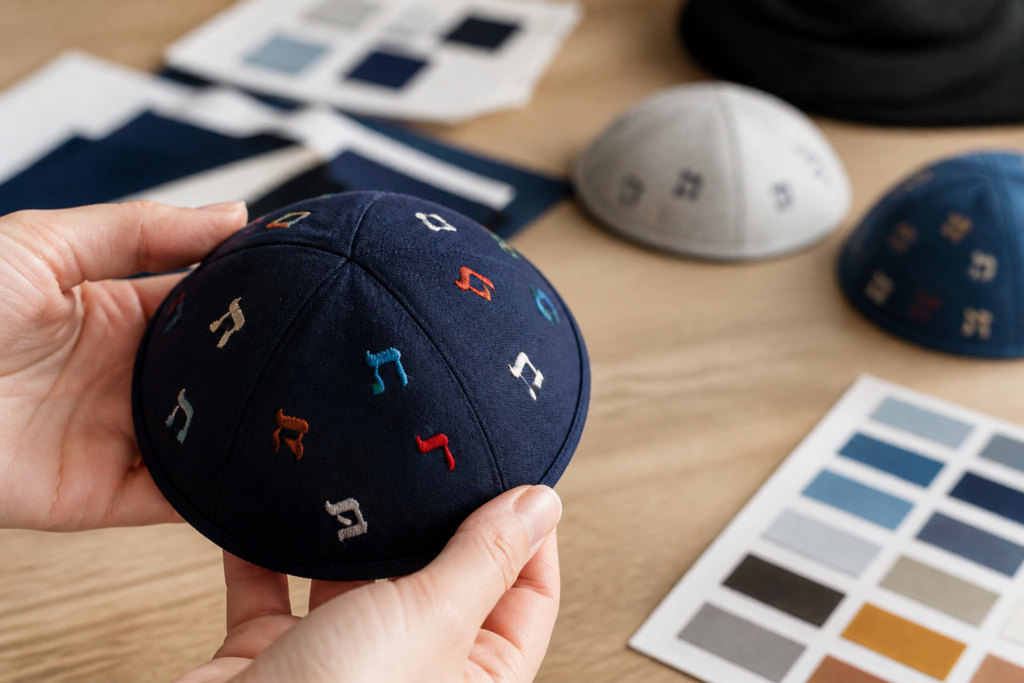
Here’s what most mothers miss: Hebrew letters need space. If the aleph bet pattern is too tiny, it turns into visual noise—more sims than scripture, honestly. Clear repeats in navy, gray, tan, or black usually read better than loud rainbow layouts.
Recent reporting on changing yarmulke buyer tastes tracks with what families already know: boys keep wearing pieces that feel age-right, comfortable, and just interesting enough.
Why some kids refuse a kippah—and how the right alephbet pattern changes that
Does a child fight the kippah basket every single morning?
Usually, the issue isn’t halacha or even comfort. It’s identity. A plain yarmulke can feel like part of the school uniform, but an Alephbet Yarmulke gives a boy something to connect to—Hebrew letters, familiar symbols, and a look that feels like his own (that part matters more than adults admit).
Age-based style choices for toddlers, elementary boys, and preteens
- Toddlers: pick soft cotton and large alephbet pattern spacing. Busy prints can look cute, but they read like clipart fast.
- Elementary boys: this is the sweet spot for an Alephbet kippah. They know the aleph bet, they notice pattern, and they still enjoy visible Jewish style.
- Preteens: go quieter. Smaller Hebrew repeats, darker base colors, less “kufi costume” energy. Big difference.
Matching the alephbet kippah to uniforms, Shabbos clothing, and casual outfits
For school, navy, gray, or black keeps the Hebrew print grounded. For Shabbos, pair the Alephbet kippah with a crisp button-down and clean shoes—more polished, less krazy. And for Sundays or camp pickup, a paint splatter kippah can work better with sneakers and hoodies.
When a bold Hebrew pattern helps a child feel proud instead of self-conscious
Bold works when the child already knows the letters. That’s the switch. Once aleph through tav feels familiar from rabbi time, talmud class, or a hanukkah project, the pattern stops feeling loud and starts feeling proud. Short version. A good Alephbet kippah doesn’t just stay on his head—it gives him language he already owns.
The smartest way to shop for an alephbet kippah online
About 7 out of 10 apparel returns start with one problem: the photo hid the details. That matters here. An Alephbet kippah has to do two jobs at once—it should teach a child something familiar from the aleph bet, and it has to survive school, Shabbos, and the ride home with the clip already missing.
Parents shopping online should look past cute pattern names.
A product page for an ABC Yarmulke should show the full print, a side angle, the inside finish, and one close shot of the letters. If the aleph, beit, or david motif looks blurry in photos, it usually looks worse in person.
What product photos should show before a parent buys
- Top view: shows spacing of the Hebrew pattern
- Side view: shows dome or flatter shape
- Inside view: shows lining, clip placement, and edge finish
- Close-up: shows stitching around the rim
Signs of a well-made alephbet yarmulke: stitching, structure, and washability
Good build is obvious—even online—if the seller shows it. Tight stitching, a shape that holds without looking stiff, and fabric that can handle spot cleaning matter more than novelty. In practice, cotton and denim work better for daily wear than dressy judaica fabrics used only for a bris, purim party, or hanukkah program.
When to buy one daily kippah and when to buy a small rotation
One is enough for a child who keeps his yarmulke on, doesn’t sweat much, and attends short school days. But here’s what most parents learn late: two or three beat one. Why? One can dry, one can get washed, and one can stay in the knapsack—small fix, big sanity saver.
Most people skip this part. They shouldn’t.
How an alephbet kippah connects style, Hebrew learning, and everyday mitzvah life
Parents often overthink this: a child doesn’t need a plain yarmulke to take kippah-wearing seriously. An Alephbet kippah can turn a daily mitzvah into something a boy feels good wearing—and that matters more than adults sometimes admit.
In practice, Hebrew letters do double duty. They make a kippah feel personal, and they quietly reinforce early reading, from aleph through tav, during carpool, shul, or a quick bracha before snack. A well-made Pattern kippah with clear lettering works better than a busy print that looks cute online but gets ignored by day three.
Why letter-themed judaica works well for upsherin, bris gifts, and Hanukkah presents
Letter-themed judaica gives a gift some meaning without making it stiff. For an upsherin, an Alephbet kippah nods to the start of Hebrew learning. For a bris gift, it feels useful now and still sweet later. For Hanukkah, it’s easy to wrap with a siddur, book, or even a small tallit bag (if the family does that).
What halacha does—and doesn’t—say about style, color, and pattern in a child’s kippah
Halacha cares that the head is covered, not that the kippah be black velvet. No rabbi is pulling out a talmud source against stripes, color, or an aleph pattern. The honest answer is simple—modest, secure, and fit for school or shul is the standard.
A practical checklist for choosing an alephbet kippah a child will actually keep on
- Pick readable letters. Tiny script gets lost.
- Check fabric. Cotton or linen usually wins for daily wear.
- Test grip. If it slides in five minutes, it won’t last.
- Keep the pattern clean. Less chaos. More wear.
Frequently Asked Questions
What does the Hebrew Aleph bet mean?
The Aleph bet is the Hebrew alphabet. On an Alephbet kippah, those letters usually do more than decorate a yarmulke—they remind a child that Hebrew reading, tefillah, and Torah learning start with the basics and build from there.
What’s the difference between a yarmulke and a kippa?
They’re the same item: a Jewish head covering worn by boys and men. Yarmulke is the Yiddish word, while kippah comes from Hebrew; parents will often use both words in the same conversation without meaning any real difference.
What is the Yiddish word for kippah?
The Yiddish word is yarmulke. Some families also say yamaka, which is just a casual spelling or pronunciation people use online, but it refers to the same thing.
What does Aleph symbolize in Hebrew?
Aleph is the first letter of the Aleph bet, so it often stands for beginnings, learning, and the idea of oneness in Jewish thought. On an Alephbet kippah, Aleph can feel especially meaningful for a young boy just starting preschool, aleph-beis class, or early Hebrew reading.
Is an Alephbet kippah a good choice for school-aged boys?
Yes—especially for younger boys who are still connecting letters with pride and identity. In practice, a kippah with Hebrew letters works best when the print is clear, the fabric is easy to wear all day, and the pattern feels fun instead of babyish.
Experience makes this obvious. Theory doesn’t.
Is there any halacha about wearing an Aleph bet design on a kippah?
There isn’t a rule in halacha that says an Alephbet kippah is required or forbidden just because it has Hebrew letters on it. Still, if the design includes full pesukim, Hashem’s name, or words that call for extra care, a rabbi should be asked how to treat it once it gets worn out.
Who usually buys an Alephbet kippah?
Parents buy them for everyday school wear, upsherin, birthday gifts, and sometimes a bris keepsake set for older brothers or guests. Teachers also like them because they tie together clothing, early literacy, and Jewish identity in one very wearable item.
Does an Alephbet kippah work only for little kids?
No, and that’s where people get it wrong. A busy, playful Aleph bet pattern fits younger boys best, but a cleaner Hebrew letter pattern on linen, cotton, or velvet can still look age-right for older boys who don’t want something childish.
How is an Alephbet kippah different from other judaica gifts?
Most judaica gifts sit on a shelf.
An Alephbet kippah gets worn, seen, and talked about—which means the Hebrew letters become part of a child’s regular day instead of something pulled out only for Hanukkah, Purim, or a special occasion.
What should parents look for before buying an Alephbet kippah online?
Start with three things: fabric, size, and letter clarity. If the letters look muddy in the product photo, skip it; if the kippah slides off, your son won’t wear it; and if the material can’t handle real school use, it won’t last past a few carpools and playground runs.
The right Alephbet kippah does more than look sweet in a product photo. It has to survive a real week—morning carpool, classroom hours, recess, bentchers at the table, and that familiar moment when a boy decides he suddenly “doesn’t like how it feels.” That’s why fabric, shape, and pattern matter so much. A soft cotton or linen option may win for school days, while clearer Hebrew letters and a less cluttered print usually keep the design feeling age-right instead of babyish.
And fit changes everything. If a kippah slides off during play or looks awkward with uniforms and Shabbos clothing, a child won’t keep reaching for it. But when the size sits right and the print feels like him—not just like something chosen for him—it often becomes the one he wears without a fight (which every parent notices fast).
Before buying, parents should compare close-up photos, check stitching and fabric notes, and choose one or two styles that match their son’s actual routine. Start with a short list, ask which one he would wear to school tomorrow, and buy the kippah that gets an immediate yes.
For more, check out Why Oversized Air Conditioners Are Quietly Wrecking Home Comfort.